Short answer: people visiting a therapist website want to know if you can help, what it costs and how to reach you. Answer those three questions in plain, calm language.
The screens below come from Fallow, our therapist template. "Marlow Therapy" and its fees are sample content.
What the first screen should say
Someone may arrive tired or worried. Tell them who you help, how you meet and what to do next, before they have to scroll.
- Who you help: "Individual therapy for adults working through anxiety, burnout and change."
- Practical details: online or in person, your area, session length and fee.
- One next step: "Book a free call."
Who you work with
Say which people and issues you work with, and how you work. Write as you would speak to someone in a first conversation.
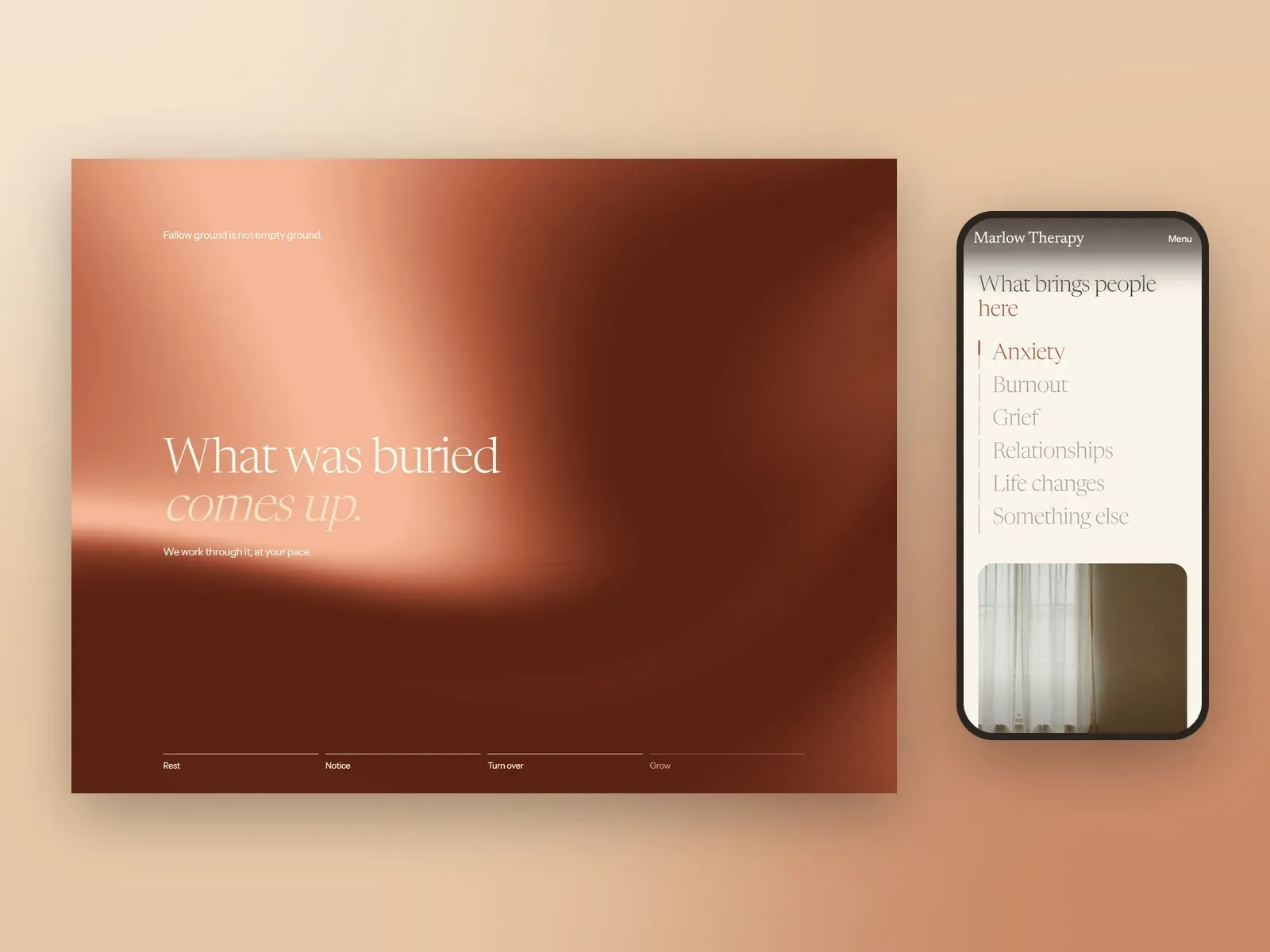
A short list of topics helps people recognise themselves. Use their words, like "burnout" or "life changes", more than clinical terms.
Your background
List your training and any registration or license that applies where you practice. A real photo helps people feel they know who they will meet.
Fees and session details
Show your fee, session length, and whether you work online, in person or both. Clear details save time for you and for the person reading.
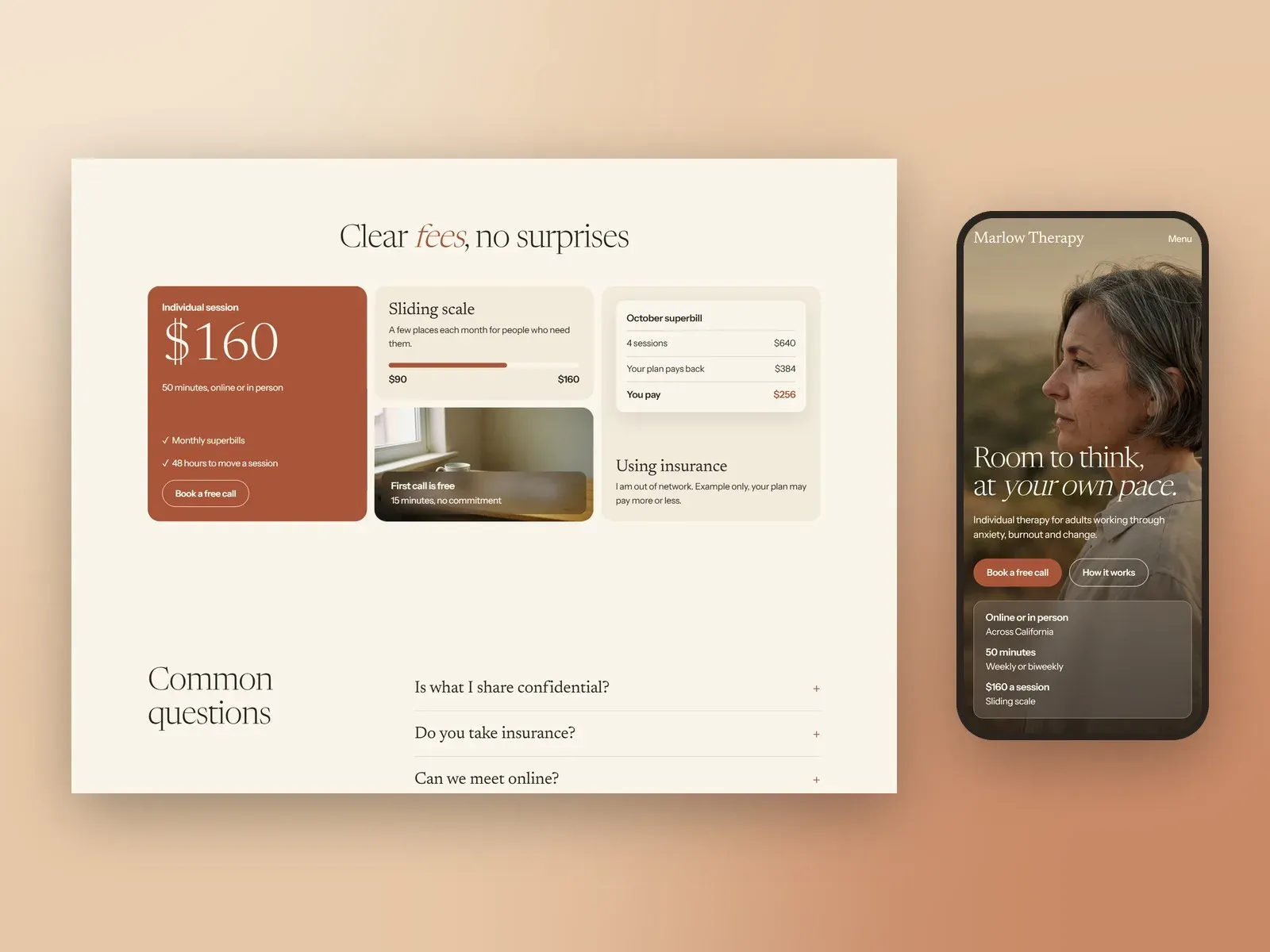
If they apply to you, also explain:
- Whether you take insurance, or offer superbills.
- Whether you have a sliding scale.
- Your cancellation policy.
- Whether the first call is free, and how long it lasts.
Rules on fee estimates differ by place. In the US, check what the Good Faith Estimate rules ask of you.
Current openings
Tell people if you have space now. If you have a waiting list, say so. Keep this part up to date.
Answer common questions
A short list of questions can settle doubts before the first call:
- Is what I share confidential?
- Do you take insurance?
- Can we meet online?
- What happens in the first session?
- How long does therapy usually last?
A simple contact page
Ask only for what you need to reply. Do not invite people to share health details in a form, and check which privacy rules apply to your practice.
Explain that the form is not for emergencies, and say where people can get urgent help in your area.
Say how soon you usually reply. In the US, ask what HIPAA means for your forms and booking tools before you connect them.
Which pages you need
| Page | What it answers |
|---|---|
| Home | Can you help me, and what do I do next? |
| About | Who will I meet, and are they qualified? |
| Services | What do you work with, and how? |
| Fees | What does it cost, and can I use insurance? |
| Contact | How do I start, and when will you reply? |
| Privacy | What happens to the details I send? |
A journal is optional. Add one only if you will write for it.
Before you publish
- Read every page on a phone.
- Test the contact form.
- Add a privacy page.
- Check your fees and openings.
- Check your license details and the area you serve.
- Add the urgent help note to the contact page and footer.
- Replace all sample names, prices and photos.
Start from a template
Fallow is a calm template for therapists and small practices, with fees, booking openings, a journal and a contact page. Use it free in Framer, or get it as Astro code.